The “attention economy” is asking the wrong question – Here is the right one:

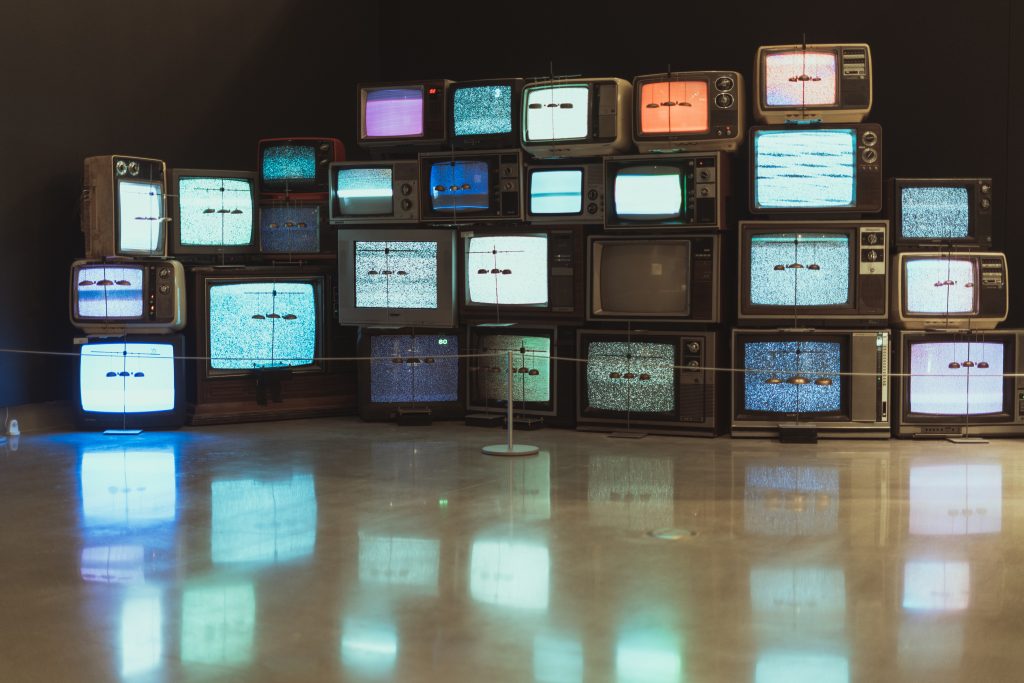
Picture credit: Jon Tyson via Unsplash
We need to talk about Tuesday – well just about any day!
On Tuesday, the average person woke up, scrolled through their phone for eleven minutes before getting out of bed, listened to a podcast in the shower, half-watched a breakfast news programme while checking emails, watched vertical video on their commute, sat through three Teams calls, ate lunch at their desk finishing a YouTube series, caught a WhatsApp voice note, glanced at the BBC homepage, started a Netflix show at 9pm, gave up after twenty minutes, and fell asleep with an audiobook murmuring into the dark.
At some point during all of that, every major media platform, broadcaster, streaming service, social network, and content creator on the planet was competing for a piece of them.
None of them won. They all just got a slice.
That is the media landscape in 2026. And the industry is still – still – asking the wrong question about it.
“What does the future of TV and content look like?”
It’s a reasonable question. It is also, increasingly, an irrelevant one.
Because the future of media will not be decided by format. It will be decided by who earns people’s time. And time, not attention, not eyeballs, not reach, is the only currency that actually matters now.
This distinction is more important than it sounds.
The attention economy gave us a useful framework for a while. It made us think about headlines, about thumb-stopping content, about the first three seconds of a video. It produced snappier journalism, shorter clips, and a mild collective shame about the listicle. But attention was never truly scarce. People will sit through a three-hour documentary without blinking. They will read a 10,000-word piece about something they genuinely care about. They will watch the same match highlights four times. Attention is not in short supply — it just has very high standards.
Time, on the other hand, is merciless. There are 24 hours in a day. You cannot AB test your way around that. You cannot optimise it with better metadata or solve it with a content calendar. And here is what makes that so consequential right now: the number of things competing for those 24 hours has become almost cosmically absurd.
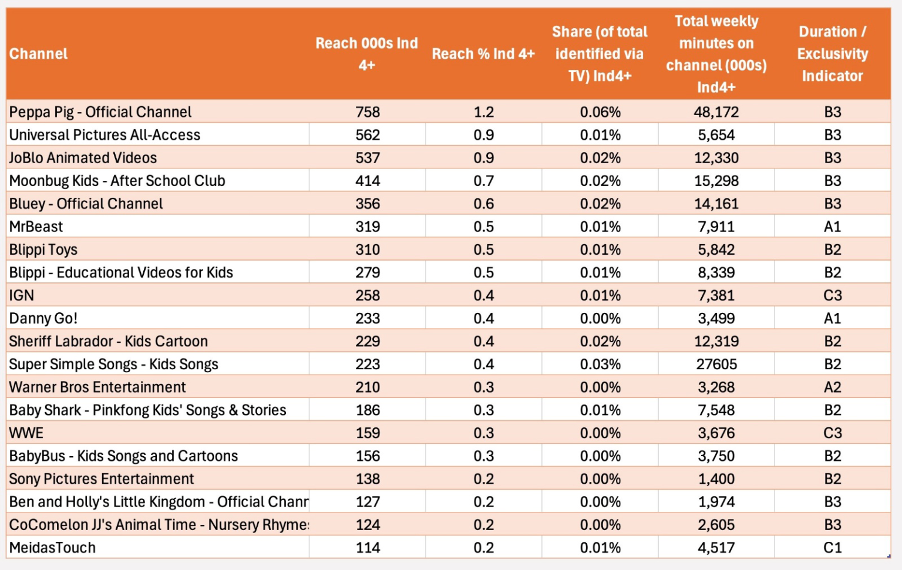
Vertical content dominates daytime viewing. Social owns the second screen. YouTube is quietly becoming television. Netflix keeps expanding into live sport, events, formats that used to belong to broadcasters. Advertisers are diversifying spend accordingly. Every platform is hunting the same prey, your time, with increasingly sophisticated weapons.
Linear decline, in this context, does not mean people stopped loving content. It means others got better at capturing attention. The audience did not leave. It redistributed.
So what separates the winners from the rest?
The companies that will define the next decade of media are not thinking in formats. They are thinking in ecosystems. The question is no longer “what show should we make?” It is “what intellectual property can we create, own, and deploy across every surface where our audience lives?”
Create IP once. Distribute everywhere. Build audiences directly, not through platforms you rent, but through relationships you own. Then expand: live experiences, merchandise, communities, new formats, global franchises. This is not a radical new idea. Disney has been doing it for eighty years. What has changed is that the barriers to entry have collapsed. A single well-constructed podcast can now seed a media brand that touches multiple formats, multiple revenue streams, and a genuinely loyal audience without a network, a transmitter, or a commissioning editor.
The organisations and companies that are winning right now understand that the question is no longer “did anyone see this?” It is “was it worth their while?” Because every piece of content, every article, every clip, every episode, every post, represents an active trade-off by a real human being. They are giving you minutes. Actual, irreplaceable, finite minutes of their one and only life. That is an extraordinary act of trust. The brands, broadcasters, and creators that treat it like one are the ones building durable audiences. Everyone else is just filling a feed.
The media industry loves a good format debate. Streaming versus linear. Short-form versus long. Vertical versus horizontal. These are interesting conversations. They are also, largely, distractions.
The real debate is simpler and harder: are you worth someone’s Tuesday?
If the answer is yes, reliably, consistently, in a way that makes them come back, you have a media business. If the answer is “probably, if they happen to find us,” you have a content operation with a strategy problem.
Time is the battleground. Earn it or lose it. There is no third option.
Tick toc.