
The BHC Bulletin

The BHC Bulletin

Salary Transparency Law – common sense and good business

Coutesy: Eric Prouzet / Unsplash

While it was big news in the US in the last few months, due to the war in Ukraine, the subsequent energy crisis and the death of Her Majesty the Queen a very interesting – and in my view pioneering – piece of legislation put onto the statute books in New York may have missed your attention.

Enshrined in the New York City Human Rights Law the snappily titled “salary transparency provisions” demands that employers advertising jobs in New York City must include “a good faith salary range for every job, promotion, and transfer opportunity advertised.”

Simple! And in an instant delivers fairness and transparency in the mystical world of corporate recruitment.

The new legislation comes into force in a couple of weeks on November 1st – so it will be a while before we see the impact, but I suspect it will be significant.

Businesses need to understand that communications to prospective future employees – the talent that will drive the business and hopefully lead to growth and innovation – need to improve. If the salary is ‘highly competitive’ or ‘market leading’ then prove it and show us the money – literally.

As with all work and human interactions, transparency should be key!

While report after report shows that salary isn’t often the main reason people move jobs, I wager there are few people who jump roles (unless for very specific reasons) that actually take a pay cut. 

This new rule is hugely significant and will start a process of openness. Time after time,

candidates are upfront, honest and transparent about their education, qualifications and experience during the interview process, only to run the risk of being misled by the recruiter about salary, knowing there’s really no way for the candidate to find out the real scale the company has budgeted, and to get transparency as to the job’s salary benchmarked against peers already working in the business.

So what are the new rules:

All employers that have four or more employees covered are including this new provision of the law, with owners and individual employers counting towards the four employees. There’s a kicker too – to ensure a catch-all – the four employees do not need to work in the same location, and they do not need to all work in New York City. As long as one of the employee’s works in New York City, the workplace is covered. 

The rules that cover salary transparency are: (taken from the NYCCHR website)

“Employers must state the minimum and maximum salary they in good faith believe at the time of the posting they are willing to pay for the advertised job, promotion, or transfer opportunity. “Good faith” means the salary range the employer honestly believes at the time they are listing the job advertisement that they are willing to pay the successful applicant(s).

Employers must include both a minimum and a maximum salary; the range cannot be open ended. For example, “$15 per hour and up” or “maximum $50,000 per year” would not be consistent with the new requirements. If an employer has no flexibility in the salary they are offering, the minimum and maximum salary may be identical, for example, “$20 per hour.” “

That feels fairly simple, straightforward and clear to me – and a result for potential candidates.

Of course, there are some issues – how do you account for the experience of someone whose been in the job for years being on a higher salary because of annual increments?

And with employment packages differ big hugely / the value of pension, shares, bonus, health etc can add thousands of invisible perks

But all of these are issues already in the market anyway.

The simple and straightforward fact is that by stating salaries there should be a reduction in pay gaps based on gender or race.

Enforcement is through complaints of discrimination filed by members of the public, with employers and employment agencies who are found to have violated the legislation being open to paying financial damages to affected employees – penalties can be up to $250,000 (ouch!) 

Right now – a huge round of applause for the New York City Commission on Human Rights. It would be superb to see this initiative being passed into legislation in more jurisdictions. (Since beginning to research this subject, it appears the state of Colorado already has a similar law – and in Europe it’s already law in Austria)

Of course, there is nothing stopping businesses from taking the initiative and rolling out salary transparency without being forced into it by the law! 

It would show open leadership. Plus based on comments on social media linked to the announcement of the implementation of the new rules, many have said it would be a sign of a company they would WANT to work for – so it’s good business for those companies wanting to get high quality candidates in an ever challenging employment market.
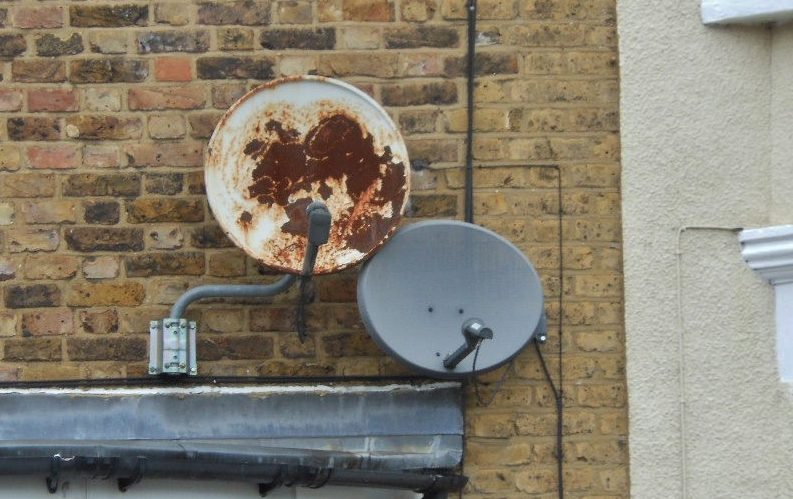

The End of the line for a broadcasting icon…

The dish bites the dust.

Announced this month – the forthcoming death of a major media player, familiar in millions of homes and so innovative its impact on the broadcast world has been felt for almost 4 decades.

The Sky satellite dish is being phased out…….

I worked at Sky in its very early years. Now it’s a huge media and studio complex owned by Comcast (the owners of NBC and Universal), but back then it was one of a number of businesses on an industrial estate wasteland in deepest darkest West London.

Sky was a brilliant business to work for – full of ideas and innovation in both technology and content. I was in the Sky News business and editorially we broke the mold and shaped how rolling news is covered – even today. Sky launching a news channel forced the BBC to do the same and made creating public service content a real purpose for a commercial broadcaster. Whether it drove dish sales can be debated, what can’t be debated is how Sky News created a wider reputation for the company and meant Sky had a channel on in every opinion formers office in the UK and beyond.

So, the announcement that Sky is ending satellite dish installations is a small piece of media history. 

Sky was satellite television – satellite television was Sky! Certainly, in the late 1980’s and through to the turn of the century.

Satellite dishes sprung up on millions of houses across the UK – but not for much longer.

It’s all about the streaming service now. Through Sky Glass or the newly announced Sky Stream – which feels like a winning product, although we don’t see it until the middle of October – Sky sees the future of the platform as content focussed and internet-delivered.

It actually feels like progress.

Stefan Lederer, CEO at Bitmovin – a streaming and video tech business – put the move into context saying to Advanced Television that the end of the dish is “indicative of the future of broadcasting, propelling us even closer to a world where everything will be streamed over the internet.”

The move will also put pressure on the broadcasters – as I suspect the product will be app based in its menu and push the old-style EPG’s further away from the front product interface.

The traditional broadcasters will have to up their Player offerings – perhaps first in line will be ITV with the new ITVX platform due to launch in Q4 2022. The BBC needs to up its game with the iPlayer as linear becomes less relevant in many households.

And what does it mean for the wider market? Well, it means that Apps and Players will be the gateway to all content in many homes. 

The first business to have a true aggregation system that allows easy access to the SVoD platforms (Disney+, Netflix etc), the main broadcasters, the gaming consoles/platforms and the video platforms (YouTube, TikTok etc) really could corner the market.

It used to be that people – lead by the non-Murdoch tabloids – called satellite dishes an eyesore. Now, in my house it’s the multiple boxes underneath the TV that are becoming an eyesore. One box to rule them all – now that would be a great seller.

The going gets tough for the media giants…

Across the last few months media commentators have been obsessed with the battle between Disney+ and Netflix with the forecast that the Mouse would dwarf Reed Hastings business.

But…the reality is the landscape is tough for media giants.

In the summer the FT reported that the largest US media companies have shed almost $400billion in value this year. Recession worries, audience changes post-pandemic and advertisers taking cover all add to the pain.

In fact, the S&P500 had at the time dropped 13% – the media sector giants had fallen 35%.

So what’s happening – well the streamers are beginning to think like the traditional networks. SVoD (Subscription Video on demand) is beginning to be supplemented by AVoD (Advertising-based Video on Demand).

Isn’t that just a re-booted linear service delivered through streaming rather than through the air? It feels like it.

Having worked in the broadcast business for more than three decades, I’d be a rich man if I had a dollar or a pound or a euro for every time I hear advertising agencies or journalists saying, “Linear TV is dead” Even the boss of Netflix used the line recently….

But sorry guys the reality is it isn’t dying, it is evolving.

The streamers are looking more like traditional tv broadcasters, and with new platforms the TV businesses are looking like and beginning to act like streamers and aggregators. In the UK ITVX should launch in Q4 2022, NBC is positioning Peacock as its gateway. In the Middle East broadcast networks are looking to take a slice of the streaming pie with localised streaming platforms.

Yes, we are seeing some broadcasters close channels – Disney and the BBC have recently closed or announced shutdowns – but these are for what are in reality niche services that never had huge audiences. 

The main Networks in each country can still record huge figures for events such as Superbowl, major dramas and news events – just think of the global audience for the funeral of the Queen.

We as an audience want a shared (or near shared) experience, we want a community and a commonality of experience. Live TV does that in a way steaming does not. Yes, millions may watch a streaming premier – but the watercooler moment is usually patchy compared to linear tv events where there is a greater universality of experience when a fixed channel shows a promoted show in a given timeslot.

We are also lazy – I’m writing this watching linear tv – it’s the news and (thanks to Hurricane Ian) the weather. I can rattle away on the laptop while someone else scheduled my entertainment saving me the pain of searching for something that scratches a viewing itch.

And while I mention ‘News” – none of the streamers have tried to offer news. It’s expensive, takes a huge amount of resource and can go wrong so very easily without a real understanding of how to make it.

We are also seeing the US-based companies re-trenching back to their home patch as subscribers think twice about multiple SVoD accounts. Netflix, Amazon and others have reduced their spend in international shows – less relevant content is heading the way of European customers. But on linear tv, the domestically based broadcasters are still pumping hundreds of millions into content production.

Researcher Moffett Nathanson also notes the continued value of linear TV. In the US linear TV revenue (mainly from ads and carriage deals) sits at $86.3 billion (€89.2bn). That’s nearly four times that of the streamers at $22.6 billion. 

No doubt more tv channels will close, but I would also wager that we’ll see the closure or merger of some of the major streamers too.

Breaking news – we have a new website, and this is the first blog post.

Well actually that’s not really breaking news: but we are Beech Hill are excited. (Thanks to WigWam for all their hard work creating the site)

But Breaking News has been in the news this week…mainly because just like a new website or blog, most breaking news isn’t really breaking….and much of it isn’t news!

CNN has announced it plans to dump or at least reduce the phrase Breaking News. Their new top news execx Chris Licht has declared the end to the red flashing lights and music fanfare that’s been a constant punctuation of the channel for years.

The decision is a rare one – one that will probably change a whole industry in just a single move. Others will surely follow across the globe.

As Fred Jacobs wrote in the brilliant Jacobs Media Strategy blog:

“In one fell swoop, CNN is serving notice they are slashing the hype, the bombast, and the overheated narrative… If everything is “breaking,” then nothing stands out or captures the consumer attention.”

https://jacobsmedia.com/the-breakup-of-breaking-news/

And that’s good news…..

Having worked in broadcast news for three decades much of the time at international rolling news channels the use of the phrase is totally valueless to the audience in most cases

At Beech Hill we specialise in communications with purpose and leadership. As the world’s news leader VNN is right to reduce the use of the phrase.

News channels need a suite of tools and graphics to guide the audience through the lifespan of a story. Yes, a major story ‘breaks’ but it also gets updated, and develops, and needs analysis.

How about:

Breaking News for the big stories

Happening Now for live events – which might become breaking news depending on what happens

News Updates for errrrr you guessed it, updates on major stories

And I’d be keen to hear your thoughts on other ideas – please use the comments section

I’d like to see CNN and others work on helping the audience understand the story at all stages, what’s new? What’s been corrected? To explain and analyse.

In a world where social media is breakneck and Twitter is a primary news source, then trusted news brands have a different purpose. Yes to make sure the story is broken in the first place, but then to sort the facts, report the facts, and help the audience by delivering thorough analysis that underpins the story and how it (might) affect them.

It’s the same for any story – or workplace communications – facts are needed to fill the information vacuum and reduce rumour and speculation.

The message needs to be tailored – clear, calm, and reasoning explained. It’s the basics of good practice.

I’m sure we will return to this subject in the months ahead to see how CNN handles this change and if others follow. but for the sake of the viewer this is a positive.

I was watching a news channel last week that used a breaking news strap over helicopter pictures of London’s Houses of Parliament ahead of a major vote. The problem? Well, the vote was over an hour away. Hardly anything breaking….certainly not news.